Which Industrial Hose Works Best for Chemical Transfer Applications?
For chemical transfer, PTFE-lined hose is usually the safest option when the media includes strong acids, aggressive solvents, oxidizers, or temperatures above 100°C. UHMWPE-lined hose is often better for bulk loading, tanker unloading, and plant transfer where flexibility and lower cost matter. Many industrial chemical hoses are rated near 10–20 bar, while PTFE constructions can tolerate service temperatures around 200°C or higher when the hose, braid, fittings, and pressure rating allow it. EPDM suits many dilute acids and alkalis but performs poorly with petroleum hydrocarbons. Selection should cover chemical concentration, temperature, pressure, vacuum, permeation, static control, coupling metal, gasket material, and cleaning conditions.
Chemical resistance starts with the liner, but the chemical name alone is not enough. A hose suitable for 10% sulfuric acid at 20°C may not be suitable for a much stronger concentration at 80°C because diffusion, swelling, and material attack generally increase as temperature rises. Manufacturers therefore publish compatibility charts by chemical, concentration, and temperature rather than using a single “chemical resistant” rating. For industrial purchasing, the complete media list should include process fluid, rinse liquid, detergent, sterilizing agent, and any chemical that may remain inside the line between batches.
A hose assembly should be checked against the worst service condition, not the average operating condition. A transfer that normally runs at 25°C can still require a higher-grade liner if cleaning reaches 90°C for 30 minutes.
PTFE is widely used where compatibility is difficult because fluoropolymer liners resist a very broad range of acids, bases, hydrocarbons, alcohols, ketones, and many oxidizing chemicals. Depending on hose construction, PTFE assemblies can commonly work at temperatures approaching 200–260°C, although pressure capacity normally decreases as temperature increases. Smooth-bore PTFE also has low surface energy, so viscous or sticky products leave less residue than they may in rougher rubber tubes. For pharmaceutical, specialty chemical, paint, coating, and solvent service, reduced product retention can also shorten flushing time between batches.
UHMWPE is more common where a plant needs a flexible suction-and-discharge hose for frequent handling. The material has very high molecular weight and strong abrasion resistance, while industrial UHMWPE chemical hoses are commonly produced in sizes from about 19 mm to 102 mm or larger. Many commercial constructions work around 10–16 bar and include textile reinforcement plus one or more steel helices for vacuum service. Compared with a heavy rubber hose, a well-designed UHMWPE hose can be easier to move during tanker, railcar, tote, and drum transfer, especially when operators connect and disconnect several assemblies during an 8-hour shift.
| Liner or Construction | Typical Strength | Temperature Range in Many Products* | Common Use |
|---|---|---|---|
| PTFE | Very broad chemical resistance | Up to about 200–260°C | Aggressive chemicals, solvents, high-purity fluids |
| UHMWPE | Broad resistance plus abrasion strength | Often about -30°C to 100°C | Bulk chemical suction and discharge |
| EPDM | Good with many acids, alkalis, hot water | Often about -40°C to 120°C | Cleaning, diluted chemicals, process water |
| Composite | Low weight and high flexibility | Often below 100°C | Tanker, terminal, marine loading |
*Actual limits vary by manufacturer, hose reinforcement, pressure, fitting system, and chemical exposure.
EPDM remains useful because not every chemical service requires fluoropolymer performance. Many EPDM compounds resist water, steam, dilute acids, alkaline solutions, ozone, and outdoor weathering very well. The limitation appears when hydrocarbons enter the process. Mineral oil, gasoline-range fluids, and many petroleum solvents can swell or soften EPDM, while other elastomers may perform better. A site handling 20% sodium hydroxide and a petroleum solvent in separate operations should therefore avoid assuming that one EPDM hose can serve both products simply because both transfers occur at the same pressure.
Pressure deserves separate attention because a compatibility rating does not prove mechanical suitability. A chemical hose rated for 16 bar working pressure may be tested at a higher proof pressure during manufacturing, but normal operation should remain within its published working limit. Pump starts, fast-closing valves, blocked outlets, and thermal expansion can create short pressure increases above steady operation. For that reason, engineers usually compare maximum system pressure—not the normal gauge reading—with the hose rating, then apply any temperature derating required by the manufacturer.
Vacuum service adds another construction requirement. During tanker unloading, a pump can pull enough negative pressure to flatten an unsupported hose even though the same hose handles positive pressure without difficulty. Suction-and-discharge chemical hoses use wire helices or equivalent reinforcement to resist collapse. A 75 mm hose carrying a liquid at several hundred liters per minute can also experience strong movement when a valve changes position, so routing, support, and minimum bend radius matter as much as liner chemistry.
Bending a hose below its stated minimum bend radius concentrates stress near the inner curve and the coupling. Repeating that bend hundreds of times during loading operations can shorten assembly life before chemical attack becomes visible.
Static electricity must also be reviewed when transferring low-conductivity or flammable liquids. Flowing solvents can generate charge through contact with the hose wall. Conductive or static-dissipative hose constructions are available, but electrical continuity needs to include the complete assembly, not only the liner. Many facilities verify continuity during inspection programs, particularly where flammable liquids are handled under standards used in North America and Europe. A hose may pass a chemical compatibility check yet still be unsuitable if resistance between couplings exceeds the electrical requirement specified by the plant.
Couplings and gaskets require the same chemical review as the tube. Stainless steel is widely used, but stainless grades do not resist every chloride, acid, or oxidizing environment equally. Polypropylene fittings may work with many corrosive liquids at moderate temperatures, while PTFE gaskets are chosen where broad chemical compatibility is needed. An assembly with a PTFE liner and an incompatible elastomer seal can begin leaking at the connection even though the hose body remains undamaged after 12 months of service.
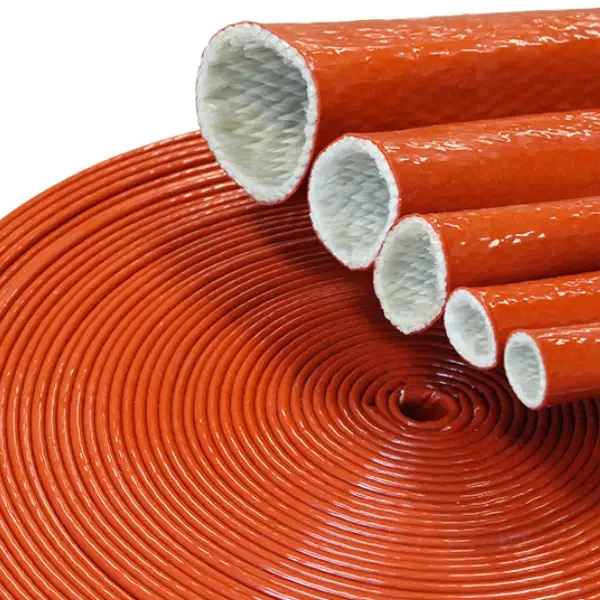
Mechanical wear can be reduced with hose protection solutions when assemblies are repeatedly dragged over concrete, steel platforms, dock edges, or truck decks. Sleeves, guards, abrasion covers, and support products protect the outside cover from scraping and localized wear. They do not increase the chemical resistance of the inner tube, so they should be treated as external protection rather than a substitute for the correct hose compound. In a busy loading area where a hose is moved 20 or 30 times per day, exterior wear can become a replacement reason even when the liner remains chemically compatible.
Cleaning practice can change the preferred hose material. A process fluid might remain near 30°C, while hot-water cleaning reaches 85°C or steam sanitation exceeds 120°C. The cleaning chemical may also be more aggressive than the product being transferred. A food, pharmaceutical, or specialty chemical plant should therefore list cleaning concentration, duration, frequency, and temperature on the same specification sheet used for the process media. A hose exposed to a 2% alkaline cleaner every day accumulates far more chemical-contact hours over a year than a line cleaned once each month.
Permeation also deserves attention because “no visible damage” does not always equal good service. Small molecules can migrate through polymer liners without producing immediate cracks or swelling. Solvents with high permeation rates can create odor, vapor exposure, or product loss on the outer side of the hose. Fluoropolymer constructions are often selected when permeation control matters, but actual performance varies with wall thickness, temperature, pressure, and chemical molecule size. Raising temperature from 20°C to 60°C can materially increase diffusion through many polymers, making a room-temperature compatibility table insufficient for hot transfer.
Inspection intervals should reflect service severity rather than a fixed calendar rule. A hose used weekly for a mild 5% cleaning solution does not age at the same rate as a hose used every day for concentrated solvent transfer. Operators should look for cover cuts, blisters, soft spots, unusual stiffness, exposed reinforcement, flattened sections, coupling movement, corrosion, and leakage. Facilities handling hazardous chemicals commonly document inspections and remove assemblies that show structural changes instead of waiting for a leak.
A practical specification can be built from eight fields: chemical name, concentration, minimum and maximum temperature, working pressure, possible surge pressure, vacuum level, required flow, and connection type. Add electrical requirements, cleaning media, bend radius, external abrasion, and expected transfer frequency when the hose is used more than occasionally. A buyer comparing two 50 mm chemical hoses at the same 16 bar rating may find very different temperature limits, liner thicknesses, vacuum capabilities, cover materials, and coupling systems.
PTFE is generally preferred where chemical range, high temperature, purity, or solvent resistance has priority. UHMWPE is often the more practical option for routine bulk transfer because it combines broad compatibility with flexibility and robust suction-and-discharge construction. EPDM remains useful for many water-based chemicals, dilute acids, alkalis, and hot cleaning fluids, while composite hose is attractive when low weight and handling flexibility matter. The final choice should follow the actual chemical concentration, temperature, pressure, vacuum, static requirement, coupling material, gasket material, cleaning cycle, and expected service frequency rather than the hose label alone.